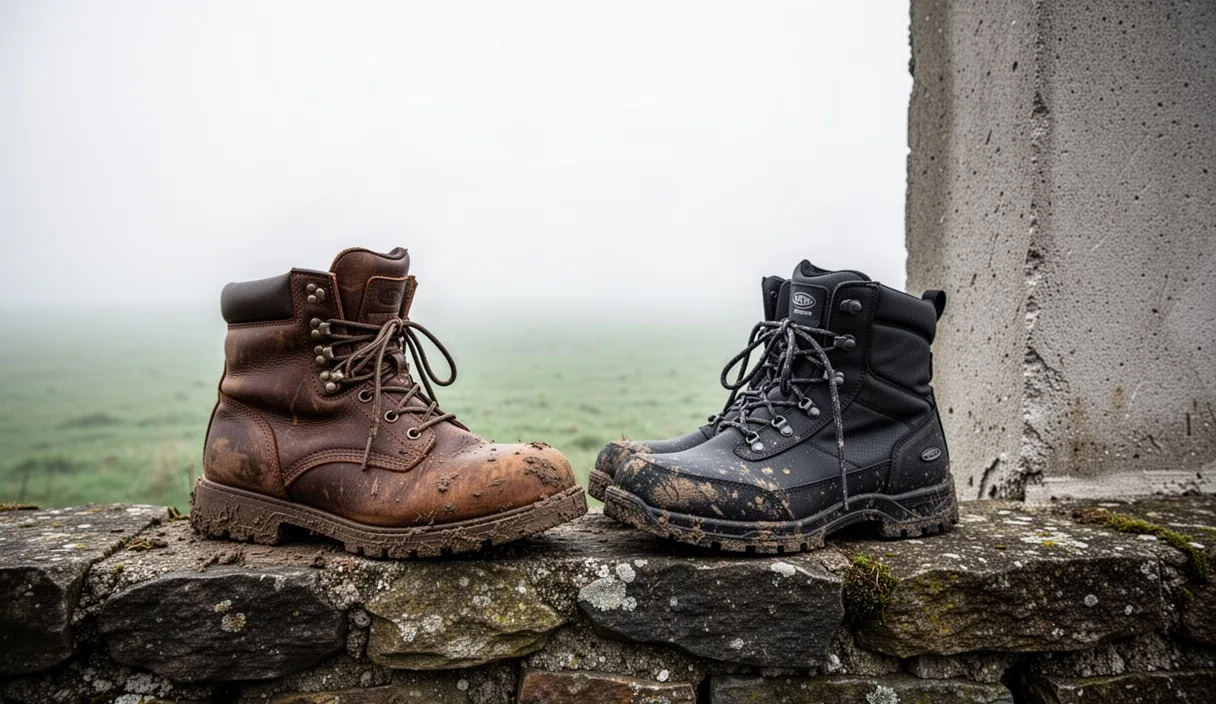
Ask ten people at the trailhead car park whether they wear leather or synthetic boots, and you will get ten different answers, most of them delivered with the confidence of a vicar reading the lesson. The truth is less tribal than the debate suggests: both materials do a good job, just not the same job, and the ground under your feet on a given weekend often matters more than brand loyalty. A pair that shrugs off the chalky, flint-strewn paths of the Chilterns can feel entirely wrong on the peat bogs above Kinder Scout. This piece is not here to crown a winner. It is here to help you match boot material to the kind of walking you actually do, most weekends, in the kind of weather this country actually produces. We will go through mud, blisters, weight, drying time, durability and care, then finish with a straight answer for anyone who can only justify owning one pair.
How each material handles mud and standing water
Full-grain leather, treated properly, is close to naturally waterproof. The fibres are dense and, with a wax or oil dressing worked in every few months, water beads and rolls rather than soaking through. On a claggy bridleway in Devon after three days of rain, a well-dressed leather boot will keep your socks dry through ankle-deep puddles for a surprising length of time, often twenty minutes or more of standing water before any seepage at the seams.
Synthetic boots rely on a membrane, usually Gore-Tex or a house equivalent, sandwiched between mesh and fabric panels. The membrane itself is genuinely waterproof, but the stitched seams and fabric-to-sole junctions are the weak points. Step into a puddle deeper than the seam line, common on flooded field paths near the Ouse in winter, and water will find its way in faster than with leather, sometimes within a minute of full submersion.
Mud behaves differently too. Leather's smoother surface sheds sticky clay-based mud, the kind common on Wealden farmland, with a firm boot-scraper and a hose. Synthetic mesh panels trap grit and mud in the weave, and on the flint-heavy tracks of the South Downs this can work its way into the fabric and, over a season, abrade it from the inside.
Break-in time and early blister risk
Leather needs breaking in, and there is no shortcut worth trusting. Expect somewhere between 40 and 60 miles of gradual wear, mixing short local walks with longer outings, before the leather has moulded to your foot's particular quirks. Skip this and a weekend in the Peak District can leave you nursing heel blisters by Saturday lunchtime.
Synthetic boots are ready sooner, often within 10 to 15 miles, because the fabric uppers flex from the first wear and there is less rigid material to reshape. This makes them the better choice if you are buying boots the week before a trip rather than the season before.
That said, synthetic boots are not blister-proof. The mesh panels can rub against bony ankles on rough scrambles, and seams sit closer to the skin than a well-fitted leather boot's smoother interior. A short list of practical steps helps regardless of material:
- Wear the socks you intend to walk in when trying boots on, not thin cotton ones.
- Walk on a slight incline in the shop if one is available, to check toe room on descents.
- Break in new boots on local, flat ground first: a Sunday loop around the village, not a Snowdon ridge.
- Carry blister plasters on any walk longer than five miles in new boots, and stop the moment you feel a hot spot, before it becomes a blister.
If blisters persist despite proper fitting and break-in, it is worth having a podiatrist check your gait rather than assuming the next pair of boots will solve it.
Weight differences over a full day's walk
A full-grain leather boot in a men's size 9 typically weighs between 900 and 1,100 grams per boot. A comparable synthetic boot in the same size usually sits between 600 and 800 grams. That difference, roughly 300 to 400 grams per foot, sounds trivial until you are twelve miles into a Lake District circuit with ascent behind you and more ahead.
Walking studies on load carriage have long suggested that weight on the foot costs more in effort than the same weight carried on the back, sometimes by a factor of several times, because of the repeated lift-and-swing motion of each stride. Over a 15-mile day with 800 metres of ascent, that lighter synthetic boot can genuinely reduce fatigue by the final descent, which matters most when tired legs and loose scree combine.
Leather's extra weight is not wasted, though. It usually comes with a stiffer sole and more substantial ankle support, useful on uneven ground where you are grateful for the extra structure on the way down a rocky gully near Malham.
Drying time after a proper soaking
This is where the two materials part ways most obviously. A soaked leather boot, stuffed with newspaper and left in a well-ventilated boot room, generally needs 24 to 48 hours to dry fully. Rush it with direct heat from a radiator or wood burner and the leather can crack or stiffen unevenly, shortening its working life considerably.
Synthetic boots dry faster, often within 12 to 18 hours under the same conditions, because the fabric uppers hold less water than leather fibres. This matters on multi-day trips: a wet Friday on the Pennine Way followed by an early Saturday start favours synthetic boots simply because they have a better chance of being wearable by breakfast.
Neither material should go near a tumble dryer or direct flame. Newspaper stuffed loosely into the boot, changed every few hours, remains the most reliable method for both, alongside a boot dryer with a low, gentle airflow setting if you own one.
Long-term durability on rocky versus soft ground
On rocky, abrasive terrain, full-grain leather generally outlasts synthetic uppers. The dense fibre structure resists scuffing from limestone scrambles and scree slopes far better than woven mesh, which can fray and tear against sharp edges within a season or two of regular use on ground like the Yorkshire Dales' limestone pavements.
On soft, boggy ground, the advantage narrows. Neither material suffers particularly from peat or soft mud in terms of structural wear, and the deciding factor becomes sole degradation and stitching rather than the upper material itself. A boot resoled once, typically after 500 to 800 miles depending on sole hardness, can often be resoled again if the upper is leather and still sound, extending a good pair well past a decade of regular walking.
Synthetic boots are harder to justify resoling in the same way, since by the time the sole wears through, the upper fabric has often degraded from UV exposure and general wear to a similar degree, making a full replacement more sensible than a repair.
Care routines that suit each material
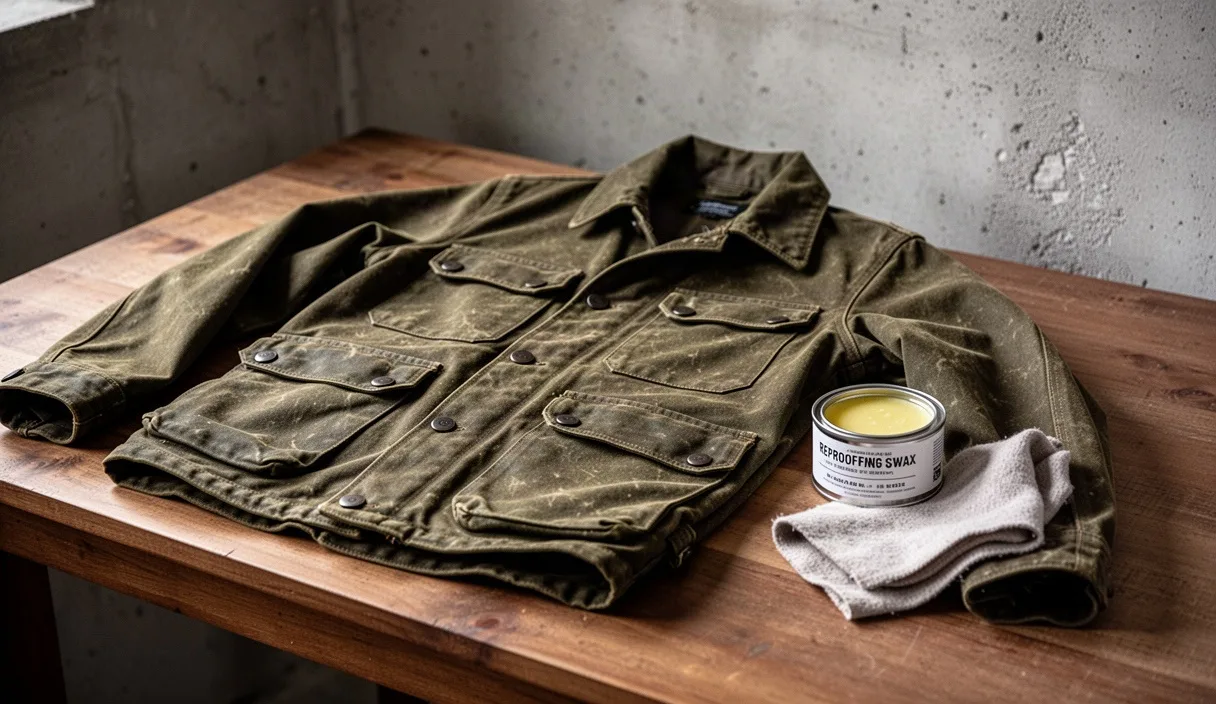
Leather rewards a bit of Sunday-evening attention. After muddy walks, brush off dried dirt with a stiff brush, wipe with a damp cloth, and let the boots dry naturally away from direct heat. Every four to six weeks of regular use, or before a big trip, work in a wax-based dressing such as beeswax or a proprietary leather conditioner, focusing on seams and the toe box where cracking starts first.
Synthetic boots need less maintenance but should not be ignored. Rinse mud off with cold water rather than hot, which can degrade the membrane's adhesive bonding over time. A occasional reproofing spray, applied every couple of months in wet seasons, helps maintain the durable water repellent coating on the outer fabric, since this wears off faster than most walkers expect, sometimes within twenty or thirty wears.
| Task | Leather | Synthetic |
|---|---|---|
| Cleaning after mud | Brush dry, then damp wipe | Cold rinse, air dry |
| Waterproofing | Wax dressing every 4 to 6 weeks | Reproofing spray every 2 months in wet weather |
| Drying | 24 to 48 hours, newspaper method | 12 to 18 hours, newspaper method |
| Resoling potential | Often twice over its life | Usually once, if at all |
Which to pick if you only own one pair
If your walking is mostly weekend loops on chalk, limestone or mixed farmland, with the occasional wet week thrown in, a mid-weight leather boot is the more forgiving single purchase. It handles standing water better, lasts longer on abrasive ground and can be resoled rather than replaced, which suits anyone who walks perhaps thirty to fifty days a year rather than every day.
If your walking includes multi-day trips where fast drying matters, or you are covering serious distance and want the lighter load, a synthetic boot with a good membrane is the more practical all-rounder. It is also the sensible choice for anyone newer to regular walking, since the shorter break-in period means fewer ruined weekends early on.
Common mistakes
Buying boots by post without trying them on with proper walking socks is a frequent error, since fit varies noticeably between brands even at the same stated size. Another is assuming a "waterproof" label means indefinite protection: both leather dressing and synthetic membranes degrade with use and need reapplying or replacing, not just trusting to the original factory treatment. Drying boots too fast, next to a fire or on a radiator, is a common way to shorten the life of either material within a single winter. Finally, wearing brand-new boots on a long or remote walk before breaking them in properly is asking for trouble that a professional fitter or podiatrist would tell you to avoid from the start.
Next steps
Think honestly about the ground you cover most often, not the ground you covered once on a memorable trip, and buy for the routine rather than the exception. Visit a shop with proper fitting expertise rather than ordering blind, and budget for a short break-in period before committing to anything longer than a half-day walk. Whichever material you choose, build a basic care routine into your week, a brush and wipe after muddy walks, occasional reproofing, and sensible drying, since consistent care will do more for a boot's working life than the choice between leather and synthetic ever will.