By late October the bridleways round here have gone from dust to soup, and anyone who's slipped on the clay stretch above the old mill will tell you that autumn walking gear is a different job to summer kit. The light drops fast, the mud holds water like a sponge, and a packing list that worked in August will leave you cold, lost or squelching by three in the afternoon.
This isn't about buying everything in the shop window. It's about the specific items that earn their place in a rucksack between October and December, when the clocks have gone back and the fields are still holding last week's rain. Below is what actually gets used, section by section, based on the sort of routes we cover in this column each week.
Footwear additions that handle real mud
Trail shoes that were fine on dry chalk paths in July turn into slip hazards on wet clay by mid-autumn. The tread pattern matters more than the price tag: look for lugs at least 4mm deep with wide spacing, since shallow or tightly packed treads clog with mud and stop gripping within a few hundred metres.
Gaiters are worth the fuss of putting them on. A pair of ankle-height gaiters keeps grit and water out of the boot top on gateways and stiles where mud is churned up by cattle or other walkers. On the Ridgeway sections near Wantage, that churned mud at gate entrances is often the worst of the whole walk, worse than open field.
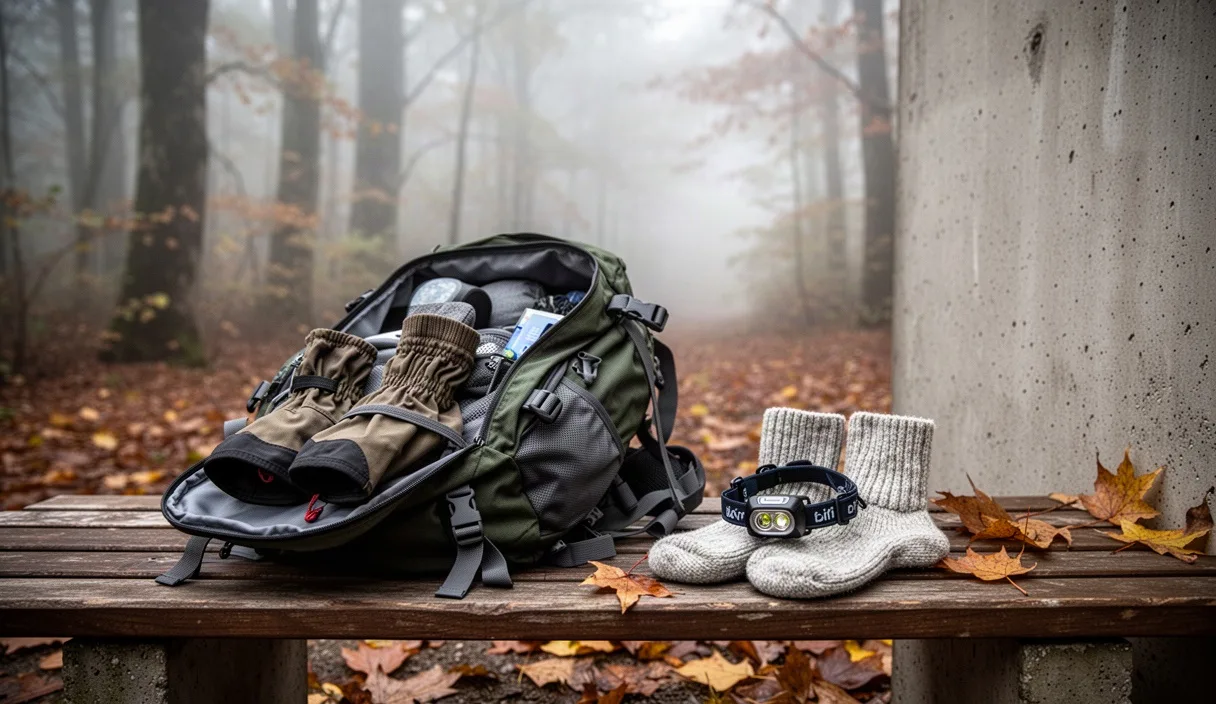
Carry a second pair of socks in a dry bag, not just for comfort but because wet socks over several hours can contribute to blisters and, in cold conditions, to reduced circulation in the toes. Merino wool dries faster against skin than cotton and holds less odour on a long day.
- Boots with a deep, open lug pattern rather than a fine trail-running tread
- Ankle gaiters, particularly on routes with livestock gates or ford crossings
- A spare pair of socks kept dry in a small waterproof bag
- A stiff brush or stick kept in the car for scraping boots before getting in
Layering for temperature swings across the day
An autumn morning starting at 4°C can climb to 13°C by early afternoon before dropping again once the sun drops behind the hedgerow around four. That's a wider swing than most summer days, and it means a single jumper under a coat won't do.
The base layer should be something that moves moisture away from skin, not cotton, which stays wet once you've warmed up on a climb. A thin merino or synthetic base, a mid layer such as a fleece or light down gilet, and a waterproof shell with pit zips gives three ways to adjust without stopping for long.
Removable layers matter more than heavy single garments. On the climb up from Coombe Bottom, for example, walkers often start in a shell and finish the ascent in just the base layer, then re-layer at the top where wind picks up across open field.
| Layer | Purpose | Example |
|---|---|---|
| Base | Wicks sweat away from skin | Merino long-sleeve top |
| Mid | Traps warm air | Fleece or lightweight down gilet |
| Outer | Blocks wind and rain | Waterproof shell with pit zips |
| Extremities | Prevents heat loss through hands, head, neck | Thin gloves, buff, wool hat |
Light sources once afternoons get short
By the second week of November, sunset in most of England falls before 4:30pm, and under tree cover or cloud it can feel dark twenty minutes earlier still. A walk that started at midday can easily run past dusk if there's a stile to negotiate or a wrong turn to correct.
A head torch belongs in the bag from October onward, even on a planned two-hour loop. Look for one with at least 150 lumens on its main setting and a red-light mode, which preserves some night vision if you need to check a map without dazzling yourself.
Spare batteries matter because cold weather drains them faster than mild conditions, sometimes by a third or more depending on the torch. A cheap backup torch, even a small keyring one, is sensible in case the main unit fails or gets left behind.
Navigation backups for low visibility days
Phone signal drops out in several of the dips and wooded stretches we've mapped in past columns, the hollow below Sheepwash Farm being a reliable example. Relying on a phone app alone for autumn walking is asking for trouble once mist rolls in or the battery dies in the cold.
A paper OS map in a waterproof case, plus a compass you actually know how to use, remains the steadiest backup. If you're unsure how to take a bearing, a local walking group or an outdoor centre can usually run through the basics in under an hour; it's a skill, not a gadget, and worth practising before you need it on a hillside at dusk.
Mist and low cloud change familiar routes surprisingly fast. A path that's obvious in July daylight can lose its markers when hedgerows have died back and visibility drops to fifty metres. Noting three or four landmarks before setting off, a church spire, a distinctive gate, a line of pylons, gives something to check against even without full visibility.
- Printed OS map (1:25,000 for most walking routes) in a waterproof sleeve
- Compass, with basic bearing skills practised beforehand
- Phone with offline map downloaded as a backup, not a primary tool
- A note of the nearest villages or landmarks along the route in case of detour
Food and warm drink choices that actually help
Cold weather increases the body's energy demand simply to maintain temperature, so the flapjack that felt like plenty in summer might not carry the same walk in December. Dense, slow-release food such as oat bars, dried fruit and nuts holds energy longer than sugary snacks that spike and drop.
A flask of something hot changes the mood of a break more than most people expect. Tea or a simple soup works better than cold water alone on a bench at the top of a wind-exposed ridge; the point isn't luxury, it's maintaining core warmth during a stop rather than losing the heat built up on the climb.
If anyone in the group has a history of cold-related conditions, such as poor circulation, it's worth a quick word with a GP before committing to long exposed routes in low temperatures; this isn't medical advice, just a sensible check before the season properly turns.
A final pack check before leaving the car or station
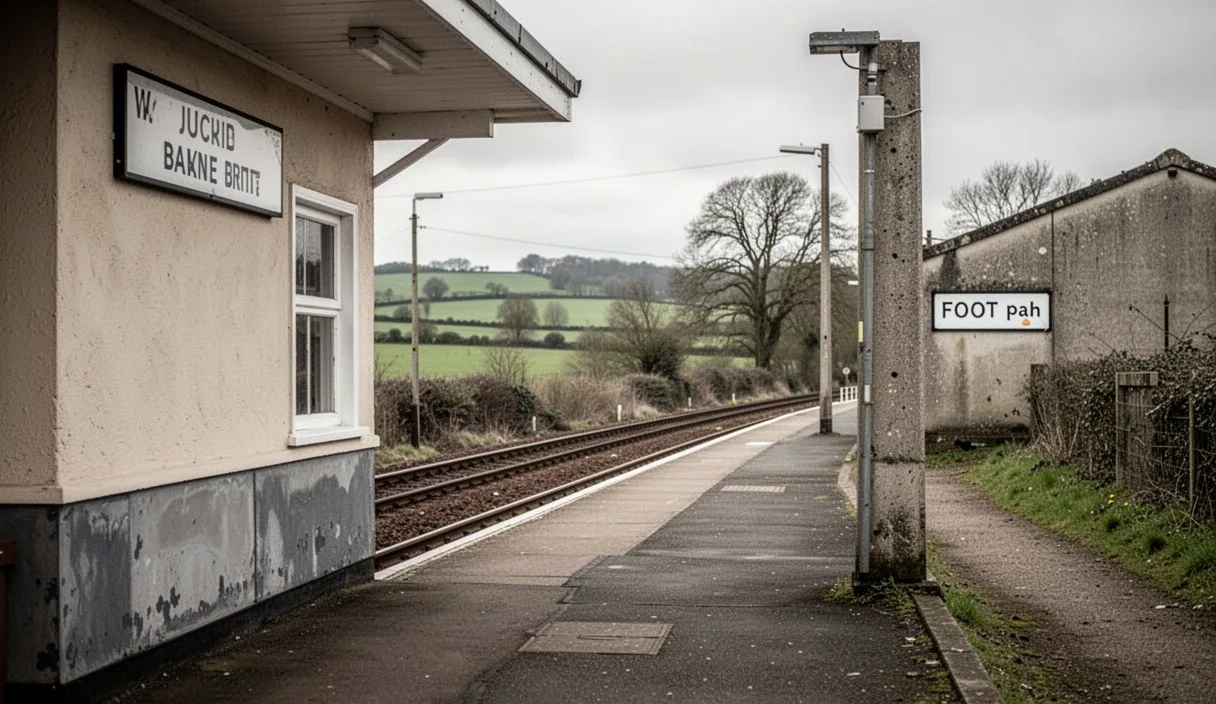
A short physical check at the boot of the car, or on the platform bench, catches the items that get left behind in a rush. Running through a fixed list out loud takes less than a minute and avoids the walk where someone realises three miles in that the head torch is still on the kitchen table.
Weather can shift faster than forecasts suggest, particularly in hill or coastal areas nearby, so checking the Met Office hourly forecast for the specific postcode of the start point, not just the general area, gives a better sense of what the afternoon will actually bring.
- Boots checked for tread and dryness, gaiters packed
- Full layering system present, not just worn layers
- Head torch and spare batteries in the bag
- Map, compass and offline phone map ready
- Food and hot flask packed, water bottle filled
- Someone told of the route and expected return time
Common mistakes
The most frequent error is treating autumn kit as a lighter version of winter kit rather than its own category; walkers under-layer because it doesn't look cold at the trailhead, then struggle once wind picks up on open ground. Another common one is packing a head torch but no spare batteries, discovering the failure only once daylight has gone.
Skipping the paper map because "the phone has signal here" is a mistake repeated on nearly every route with a dip or wooded section, since coverage is rarely consistent across a whole walk. Finally, people often underestimate how much colder a summit or ridge feels compared with the sheltered valley where they parked, leaving warm layers in the car rather than the bag.
Next steps
Before the next weekend walk, lay out the full kit list above on the kitchen table rather than packing from memory; it takes ten minutes and catches gaps before they matter on the path. If a route runs through unfamiliar ground, ring the nearest visitor centre or pub for a quick read on current mud levels and gate conditions, since local knowledge changes week to week as the season wears on. And if the forecast looks marginal, a shorter familiar loop is a better call than a longer unknown one until the days lengthen again in spring.